
Event Catering Melbourne
Full-service catering for conferences, festivals, launches and large-scale functions — one team handling menu, staff and logistics from start to finish.
Event Caterers For 100 Guests Or 500
Event catering is a logistics job with food attached. Conferences, festivals, launches, award nights and fundraisers all live or die on whether 300 people get fed in the window between sessions — and that is a planning problem before it is a cooking one.
We cook from a dedicated production kitchen in South Kingsville and bring hot-holding equipment, service stations and staff to your site. Your venue needs space and access, not a commercial kitchen.
For larger events we will do a site visit first. Power, water, vehicle access, service flow and wet-weather contingency all get worked out before you commit, not on the day.
- Conferences, festivals, launches & award nights
- 100 to 500+ guests
- Live stations, buffet, canapé or plated
- Multiple parallel service points to kill queues
- Outdoor, marquee and no-kitchen venues
- Site visit for large events
Event Menus
A starting point, not a fixed list. Every menu is built around your guest list, your budget and the dietary needs in the room.
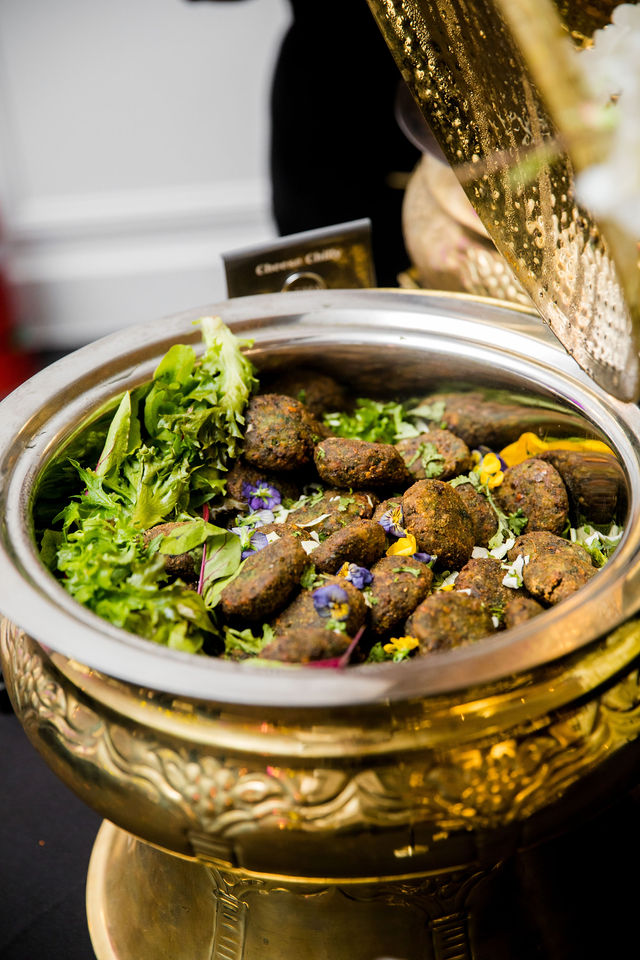
Roaming Canapés
Paneer tikka, Chicken 65, Lamb seekh, Rice paper rolls, Mini samosa, Pani puri shots
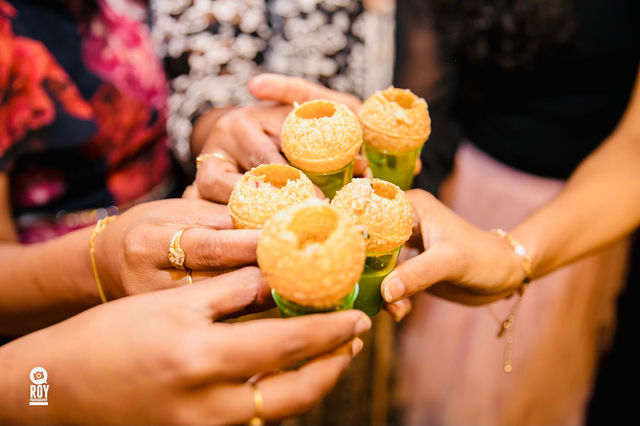
Buffet Service
Multi-curry buffet, Biryani station, Carvery, Salad bar, Breads & sides, Hakka noodles
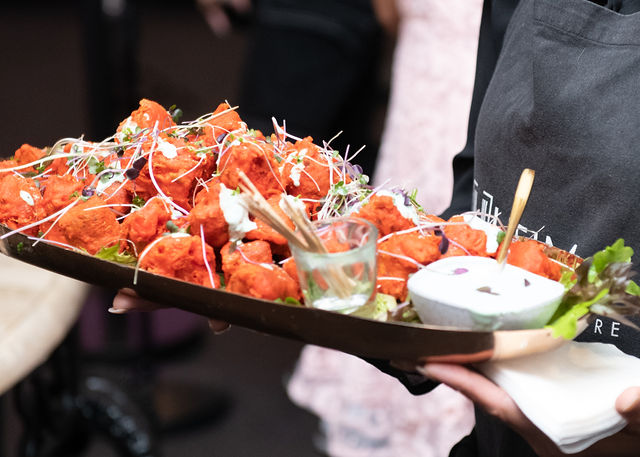
Live Stations
Tandoor grill, Charcoal shawarma, Dosa station, Chaat bar, Noodle wok, Dessert table
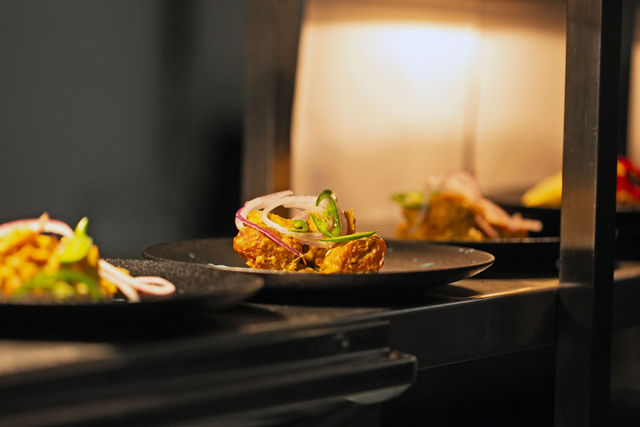
At Scale
Parallel service points, Labelled dietary stations, Hot-holding equipment, Chefs & wait staff, Multi-day menu rotation, Wet-weather plan
Three Melbourne Venues Of Our Own — Or We Come To Yours
Tandoori Flames is a catering company first. We own and operate three event venues across Melbourne, and we also cater your event at any venue, marquee, hall, park or private home you choose.
Ultima Function Centre
Keilor East — eight event spaces and capacity to 800 guests. Catered in-house by our own team.
Visit site →Fleur Weddings & Events
Fawkner — a glamorous single-room reception for up to 400 guests. Catered in-house by our own team.
Visit site →Amora
Melbourne — our third event space, for clients who want a hotel-grade setting. Catered in-house by our own team.
Melbourne-Wide, From Our South Kingsville Kitchen
Our production kitchen is in South Kingsville and our vans go everywhere — the inner west, the CBD, the bayside suburbs, the north and the outer west. Any delivery charge is quoted up front, never added later.
South Kingsville · Williamstown · Newport · Yarraville · Altona North · Point Cook · Hoppers Crossing · Tarneit · West Footscray
Mid-size events in Melbourne land in a predictable set of spaces. Community halls and sporting clubs around Yarraville, Newport, Altona North and West Footscray are affordable but often have a domestic-scale kitchen and strict pack-out times. Warehouse venues through Footscray and Docklands have space and power but no kitchen at all. Parks and reserves in Williamstown and Point Cook need council permits, with rules on vehicle access, generators and open flame that vary between Hobsons Bay and Wyndham. Daylight saving months bring most outdoor bookings, and November to March is when wind off the bay dictates where the serving line sits.
Event Catering In Melbourne — Your Questions Answered
Anything beyond a private party: conferences, festivals, product launches, community events, award nights, fundraisers, sporting functions, expos and large family celebrations.
Comfortably to 500, and beyond that with planning and a site visit. The constraint is rarely the kitchen — it is service flow, power, access and staffing, which we work out before you book.
Yes. Parks, ovals, private properties, car parks and marquees are all workable. We need to know about power, water, shade and vehicle access, and we will flag anything that affects food safety before you commit.
Yes. That is standard for us. We cook in South Kingsville and bring hot-holding equipment, so your venue only needs space and access rather than a kitchen.
Buffet and live stations move the most people fastest. Roaming canapés suit networking formats. Plated service suits seated award nights where timing matters. Many events run two in sequence.
Multiple service points rather than one long line, and we size them to the guest count. For 300-plus we typically run parallel stations so nobody waits more than a few minutes.
Yes. Vegetarian, vegan, gluten-free and halal are part of every menu. At scale we run separate clearly labelled service points so guests are not hunting through a buffet.
Yes — chefs, wait staff, chafing dishes, service equipment, crockery and cutlery. Your quote itemises staffing and equipment separately.
Large events deserve two to three months. Smaller corporate events can be arranged in a week or two. Peak season and December book out earliest.
Yes. Conferences and festivals running across several days are straightforward, and we will vary the menu so attendees are not eating the same thing twice.
Yes. Tandoor grills, charcoal shawarma, dosa, chaat and rice-paper-roll stations all work as live service and double as entertainment.
We plan for it. Covered service points, hot-holding and a wet-weather contingency are part of the run sheet for any outdoor booking rather than an afterthought.
Event catering covers the menu, the cooking, the equipment to serve it and the crew to run service. Our quotes list each of those so you can see what is in and what is not. Typical inclusions are chafing dishes and fuel, serving utensils, crockery and cutlery where needed, staff for the hours booked, setup and pack-down of the service area.
Yes. Most community halls and sporting clubs across Melbourne have nothing more than a domestic kitchen, and we work in those regularly. Food is cooked in our South Kingsville kitchen, transported hot and held at temperature on site, with tandoor and station items finished in front of guests. We need bench or trestle space, bin access and vehicle access.
Usually one to three hours before guests, depending on the service style and guest numbers. A drop-off needs the least time. A buffet needs enough to set the line and heat chafers. Live stations need the longest because equipment has to come up to temperature. We confirm the exact bump-in window with you and the venue before the date.
Yes, and it is the most common format for mid-size functions. Roaming canapes cover the arrival hour while guests mingle and photos happen, then the buffet opens after the first round of speeches. It keeps people fed early so the main service is not rushed. We cost both parts in the one quote.
Hot food is held in chafing dishes over fuel, topped up in waves from insulated transport boxes rather than all laid out at once. That way the last guests through the line get food in the same condition as the first. Tandoor, grill and chaat items are cooked or assembled on site during service, so they come out fresh.
Leftover food is yours if you want it and you provide containers, or we remove it. We will not leave trays of hot food sitting out at the end of the night, because once it has been through service there is no safe way to hold it. If you want deliberate extra portions to send home with family, tell us when we set final numbers.
Allow around 40 minutes for 100 guests on two lines, and roughly an hour for 300 on three. The variable is not the kitchen, it is floor layout — how far guests walk, whether tables are released in groups, and if the dessert point is separate. Staged releases by table number cut perceived wait more than adding food does.
Yes, with a serving point in each space rather than one central line. Splitting service across levels needs its own hot holding, staff and plate supply per zone, plus a lift or stair path that is not also the guest route. It works well for events with a formal dining room and a separate cocktail area running at different times.
We plan a wet-weather position for the kitchen and serving line at the site visit, not on the day. That usually means a marquee section or an undercover area with power access reserved for catering. Melbourne shifts fast, so the call gets made several hours out and the serving layout is pre-agreed for both scenarios.
For anything over about 150 guests at an unfamiliar site, yes. We check loading access, kitchen or prep space, power, water, bin points and the distance from prep to serving line. That walk-through usually changes the equipment list and the crew size. For venues we work in regularly, photographs and a floor plan are often enough.
It depends on service style more than headcount. A buffet for 250 runs on a smaller floor team than plated service for the same group, because plated needs synchronised delivery and clearing. Hot stations, beverage service and multi-course menus each add crew. The honest answer comes after the run sheet exists, not from a ratio.
Yes, and it often works better than choosing one. Roaming canapes during arrival, a buffet or plated main, then a dessert station is a common structure for 150 to 400 guests. Each phase moves guests differently, which keeps the room from stalling. The constraint is kitchen capacity and crew, so decide the structure before the menu.
Event catering built around your run sheet
A mid-size function has a shape to it. Guests arrive and want something in their hand. Speeches happen. Mains need to land in a window, not whenever the kitchen is ready. Dessert comes out after the formalities. Event catering is the work of fitting food to that sequence, and it is what we do across Melbourne — engagements, birthdays, anniversaries, charity nights, community functions, cultural celebrations and launches for anywhere from a few dozen guests to several hundred.
We cater at your chosen site. Function rooms, halls, sporting clubs, galleries, warehouses, marquees and private properties all work. Our crew travels with chafers, tandoor units, serving gear and enough hands to run the service you booked. The menu is written to the venue as much as to your taste — a hall with no kitchen gets a different plan to a function room with a commercial bench, and we work that out before you sign anything.
 Tandoori Flames Melbourne
Talk To A Human
Call 0401 338 005 any day between 9am and 8pm, or send the form and we will come back within 24 hours.
Get An Itemised QuoteWhat makes event catering work on the night
Timed to the formalities
We build the food service around the agenda you give us. Canapes while guests arrive, mains held until the speeches wrap, dessert on cue. If the schedule slips by twenty minutes, the crew adjusts rather than serving into an empty room. The lead hand carries the run sheet and talks to your MC.
Live stations that draw a crowd
A live tandoor station, a charcoal grill working at the table, a chaat station or a dosa station gives guests something to watch and a reason to move around the room. They also mean food leaves the pan and goes straight onto a plate rather than sitting in a tray.
Set-up planned around the venue
We check access, power, bench space and distance from the loading area before the day. That determines whether we cook on site, finish on site, or transport hot and hold. It also determines where the service line goes so a queue does not cut the room in half.
A function menu for a mid-size Melbourne event
Event menus usually run in three waves — something to hold on arrival, a substantial shared service, then dessert after the speeches are done.
Roaming on Arrival
Kale & Spinach Pakoras, Calamari Pakoras, Chicken Reshmi Kebab, Chilly Paneer, Aloo Tikki Chaat
From the Tandoor
Malai Chicken Tikka, Seekh Kebab, Tandoori Mushroom, Fish Tikka, Tandoori Prawns
Buffet Mains
Punjabi Butter Chicken, Lamb Madras Curry, Punjabi Malai Kofta, Amritsari Chole, Methi Malai Matar
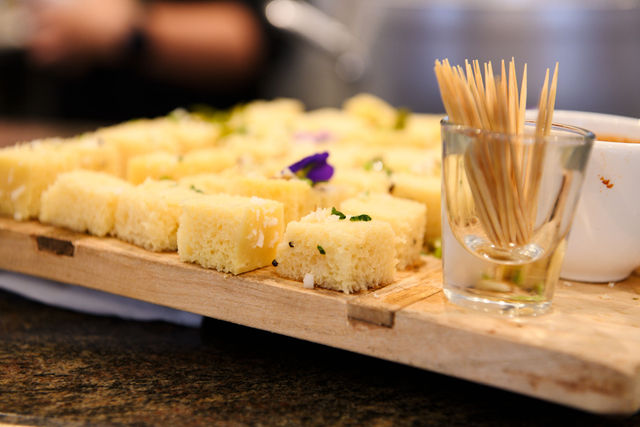
Rice, Breads and Dessert
Lamb & Goat Biryani, Coconut Rice, Kashmiri Naan, Faluda Kulfi, Sizzling Chocolate Brownie
A starting point, not a fixed list. Swap any dish at no extra charge — the menu is built around your guest list, your budget and the dietary needs in the room.
What happens on site before guests walk in
Bump-in time depends on the service. A buffet for a hundred and fifty guests needs a couple of hours on site to set the line, get chafers to temperature and plate the first wave of canapes. Live stations need longer, because a tandoor has to come up to heat and a chaat station needs its components laid out. We book our arrival with the venue directly once you confirm, so the coordinator knows when the truck is coming and which door we are using.
During service the crew works the room rather than standing behind the line. Platters get topped up before they look empty, vegetarian dishes stay clearly separated, and someone keeps an eye on the slowest table. Afterwards we pack down our own equipment, wipe down the service area and remove the rubbish our service created, so the venue gets the room back in the state its contract expects. Anything the venue requires in writing — certificates of currency, food safety documentation, bump-out times — we send through ahead of the date.
Event Catering Planning Benchmarks By Guest Count
These are the practical numbers that change as an event grows, useful for sanity-checking a plan before you commit to a service style.
| Guest count | Serving points needed | Realistic service window | What usually breaks first |
|---|---|---|---|
| Up to 60 | One buffet line or roaming canapes | 30—40 minutes | Nothing much, if the space is not cramped |
| 60—150 | Two lines, double-sided if space allows | 40—55 minutes | Queue length at a single entry point |
| 150—300 | Two to three lines plus a dessert point | 50—70 minutes | Hot holding capacity and plate supply |
| 300—500 | Three to four lines, staged by table group | 60—90 minutes | Floor traffic and clearing between courses |
| 500—800 | Four or more lines with zoned service | 90—120 minutes | Kitchen footprint and loading access |
Where Mid-Size Event Catering Comes Unstuck
One serving point for everyone
A single buffet line moves roughly a guest every eight to ten seconds once it is flowing. At 250 guests that is a long tail, and the last people eat cold food while speeches have started. Split into mirrored lines, open them at the same moment, and position them so the queues run away from each other rather than crossing.
Running the agenda over the food
Speeches, first dances and presentations scheduled on top of service stall the kitchen mid-course. Food either waits and dries out or goes out while nobody is seated. Build the run sheet with the caterer and the MC in the same conversation, agree the cut-off for each course, and nominate who signals the kitchen to hold or go.
Underestimating setup time
A 300-guest buffet with hot holding, serving ware, linen and staff briefing needs hours on site, not minutes. Venues that release the room ninety minutes before guests arrive force a rushed setup and a visible one. Negotiate bump-in access when you book the space, and tell the caterer the earliest hour the doors actually open.
Guessing children and late arrivals
Children eat less but need earlier service and different dishes. Guests arriving after the main service need something held back. Neither gets counted in a flat headcount. Give the caterer a breakdown by adults, children and likely stragglers so portions, timing and a holdback plate allowance are built in rather than improvised.
Get An Itemised Quote Within 24 Hours
Six details is all we need to start. No deposit, no obligation, and we will not add you to a mailing list.


